
Furumachi Geigi: A Living Legacy of Niigata’s Lively Port
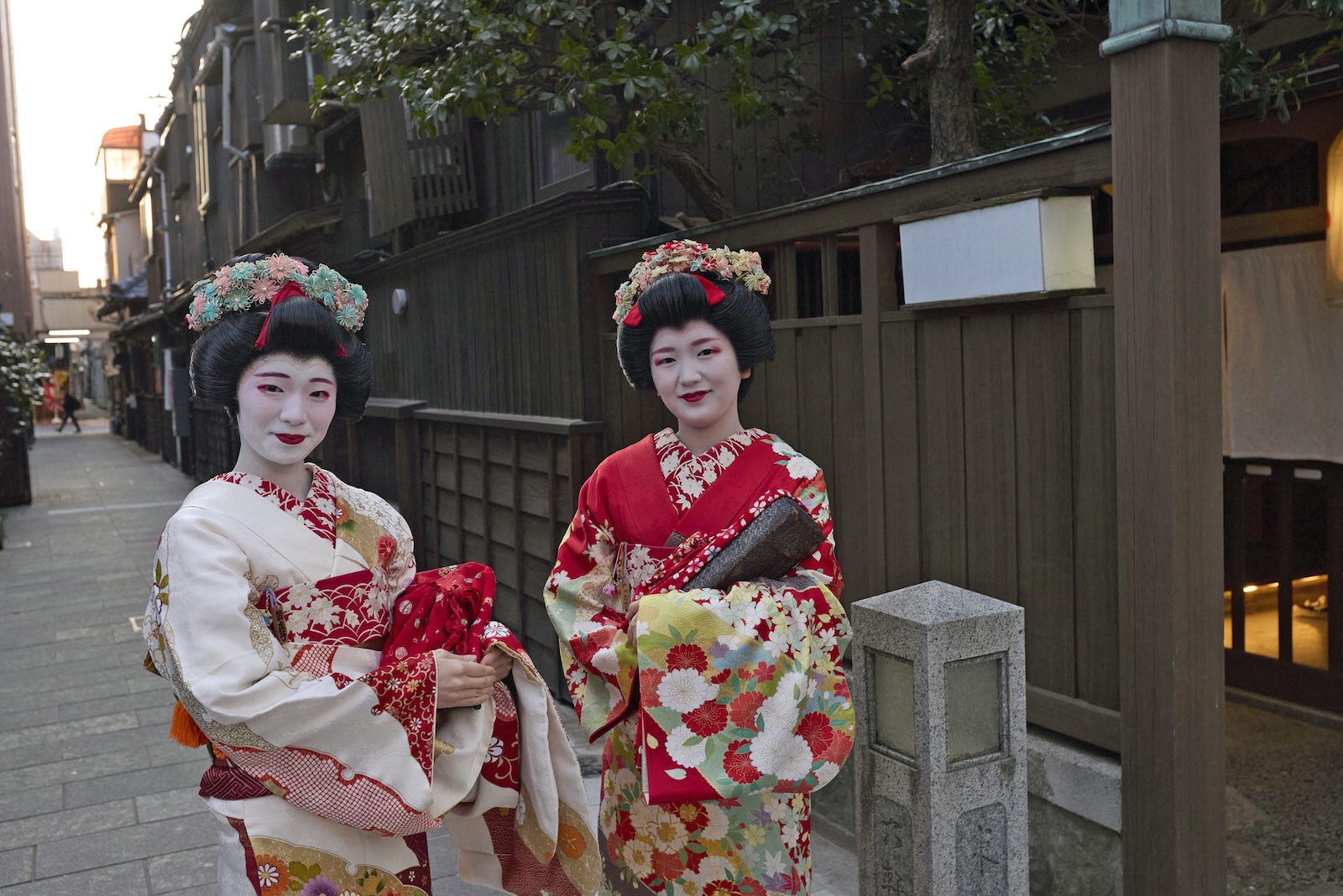
What, exactly, drives the enduring allure of the traditional performers known as geigi? What inspires event planners and visitors from near and far to book an evening of merriment with them, or sparks the tiny thrill felt when encountering one in the street? In the hardworking port city of Niigata on the northwest coast of Japan’s main island, the approachable charm of these entertainers trained in centuries-old song and dance is rooted in the character of the place, and in the very nature of their art: epic ballads evolved from a rich milieu of seafaring, mining, and folk traditions, and a distinctive style of rhythmic dance choreographed to reveal the inner worlds of those tales. As cultural ambassadors they carry forth the spirit of a city that has long balanced refinement with warmth, and elegance with easy laughter.
When all schools of the traditional Japanese dance known as Nihon Buyo were collectively designated an Important Intangible Cultural Property in 2023, the country effectively gained 56 living national treasures* in the related foundational arts of dance, song, shamisen, and percussion. One of these artists is Ichiyama Nasoro VII, the head of the Ichiyama school and the first individual from the city of Niigata to receive the honor. The recognition brought renewed vigor to the Furumachi geigi community, a vibrant and close-knit group of women who train under her and perform this style of dance in the Furumachi “old town” district of the prefectural capital.
*Catchy though it may be, “living national treasure” is a popularized term for a title that officially is styled “Holder.” When an art form is designated an Important Intangible Cultural Property by the national government, individuals who have mastered its specialized body of techniques are recognized and asked to reinforce their efforts to transmit those skills to the next generation.
Furumachi: A cultural quarter born of commerce
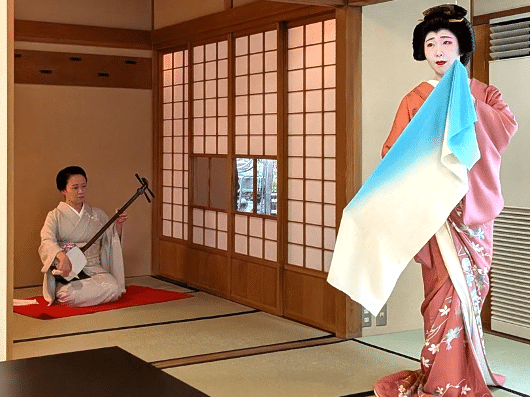
Beniko, a longstanding member of the Furumachi geigi community, and Sayako,
who in 2025 was promoted to the tomesode-san rank of senior geigi, perform for an intimate lunchtimegathering at Ikinariya.
Drawing on a tradition founded in Osaka in the mid-1700s by a kabuki actor turned choreographer, the Ichiyama school moved its base to Furumachi during the tenure of Nasoro III. Thanks in part to the bustling wealth of Niigata Port, at the time this entertainment district was as renowned as those of Gion in Kyoto and Shinbashi in Tokyo. Now, with two centuries of history in Furumachi, the Ichiyama school is one of the oldest dance lineages in Japan. It is distinguished by gestures and arrangements that draw the audience into the emotive world of the song, conveying not only the inner motivations of the characters but the unfolding scenery as well. Even if you can’t follow the lyrics you will know that the dancers are stepping through snow, or that cherry blossoms are falling, or that a mountain lies in the distance, and will sense the shifting moods of the tale as it is sung. The dance repertoire of the Furumachi geigi today is largely unique to the Ichiyama school, and includes pieces choreographed by its founder.
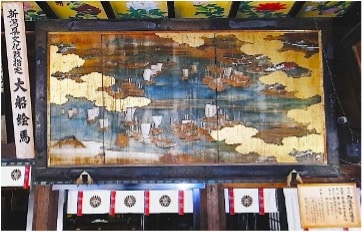
This votive plaque painted in 1852 and dedicated to Hakusan Shrine by a prominent shipping agent depicts detailed scenes of rice sacks for taxation being loaded at Niigata Port and the ships setting sail for Osaka (upper left) and Edo (Tokyo; upper right).
The songs of the geigi are filled with the rhythms and cadences of work chants, festival celebrations, and maritime ballads. As a major producer of rice and sake, especially, the port of Niigata was a key stopover on the kitamaebune route, the great coastal shipping circuit that linked Osaka with Hokkaido from the mid-eighteenth century until the first few years of the twentieth. These merchant ships carried more than goods up and down the Sea of Japan coast—they moved ideas and fashions, too. And because Niigata’s port is located at the convergence of the Agano and Shinano Rivers—the Shinano being Japan’s longest—goods, people, and stories traveled there from deep inland as well. Moreover, Niigata has always been a gateway of exchange with Japan’s continental neighbors; that history is found in the songs as well.
Back then canals crisscrossed the city center, and boats could slip into calm channels where cargo could be unloaded with ease. As the city flourished a lively entertainment district grew, its narrow streets lined with tea houses and restaurants where merchants, ship captains, traders, and elites sought not only food and drink but companionship, conversation, and song and dance. There were brothels then, too, but with successive zoning measures they were moved out of the city center by 1898. From that time the present-day Furumachi neighborhood, centered on the area east of the Chuo Ward office and bordered by Nishibori-dori street to the west and Higashibori-dori street to the east, took shape as it is today: a place to enjoy the arts of dance, music, song, and conversation presented by women who serve, in effect, as cultural ambassadors of their city.
Today more than a third of the buildings in the area are historic structures. Those of the venerable Nabejaya dining establishment in the heart of Furumachi, for example, date back to 1910 and comprise several Registered Cultural Properties. (The business itself is decades older, but its original buildings were lost to fire in 1908.) A short walk away in an adjacent district is another renowned venue, Ikinariya. It, too, boasts a number of Registered Cultural Properties on its grounds, some dating back to 1877 or earlier. In all, about a dozen haute cuisine
ryotei restaurants and other venues in this community assist with bookings for geigi today, and reservations can be made just as easily for an intimate party of two as for an elaborate banquet seating 200 or more. The fees to hire geigi are surprisingly reasonable, charged by the hour. But how is it that such a decidedly traditional form of entertainment has managed to endure in these times?
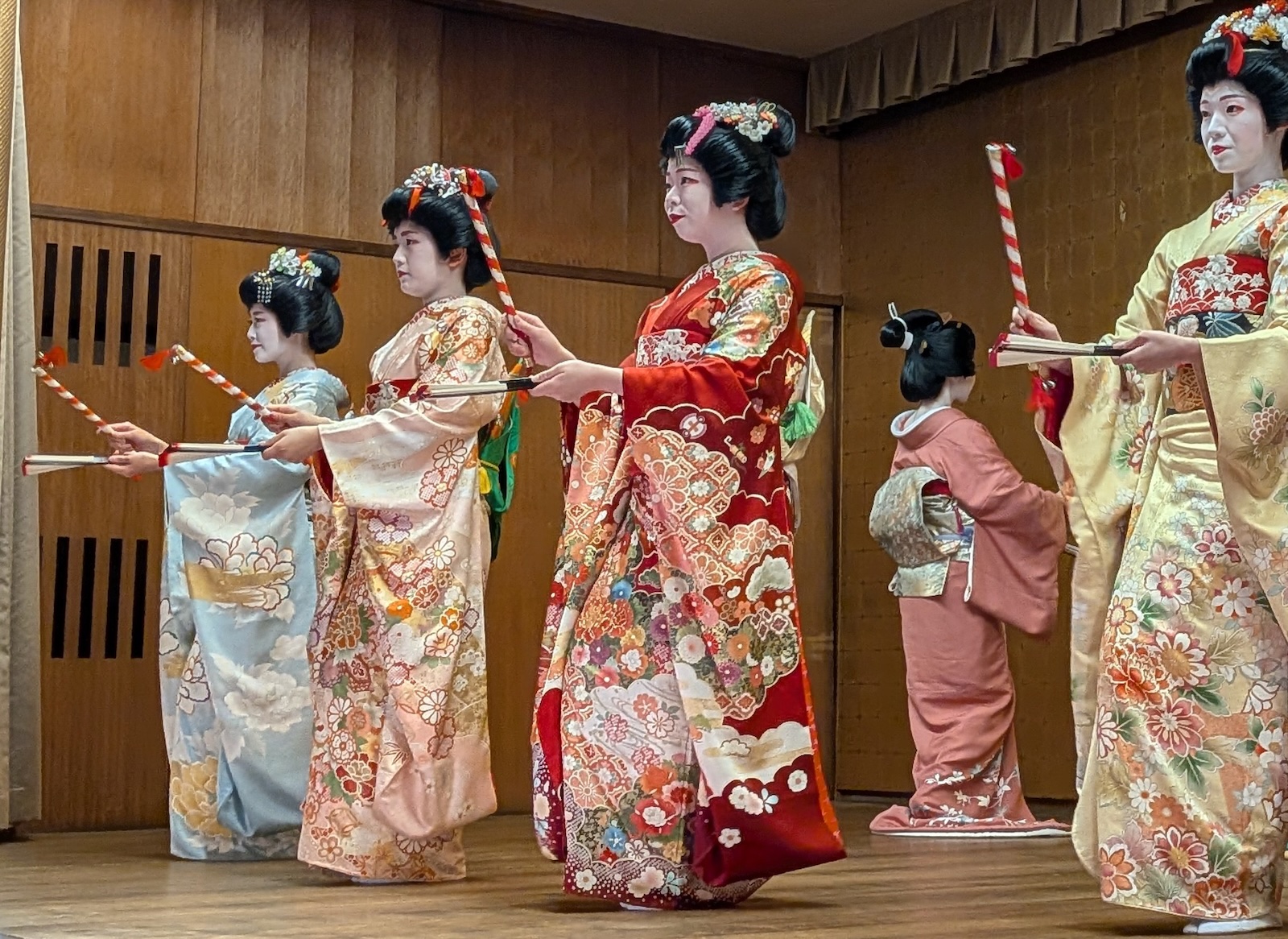
The Furumachi geigi community pulled out all the stops for a year-end banquet held at Nabejaya, performing local favorites for a full house of Niigata business leaders and supporters.
Revitalization: Honoring tradition, building a future
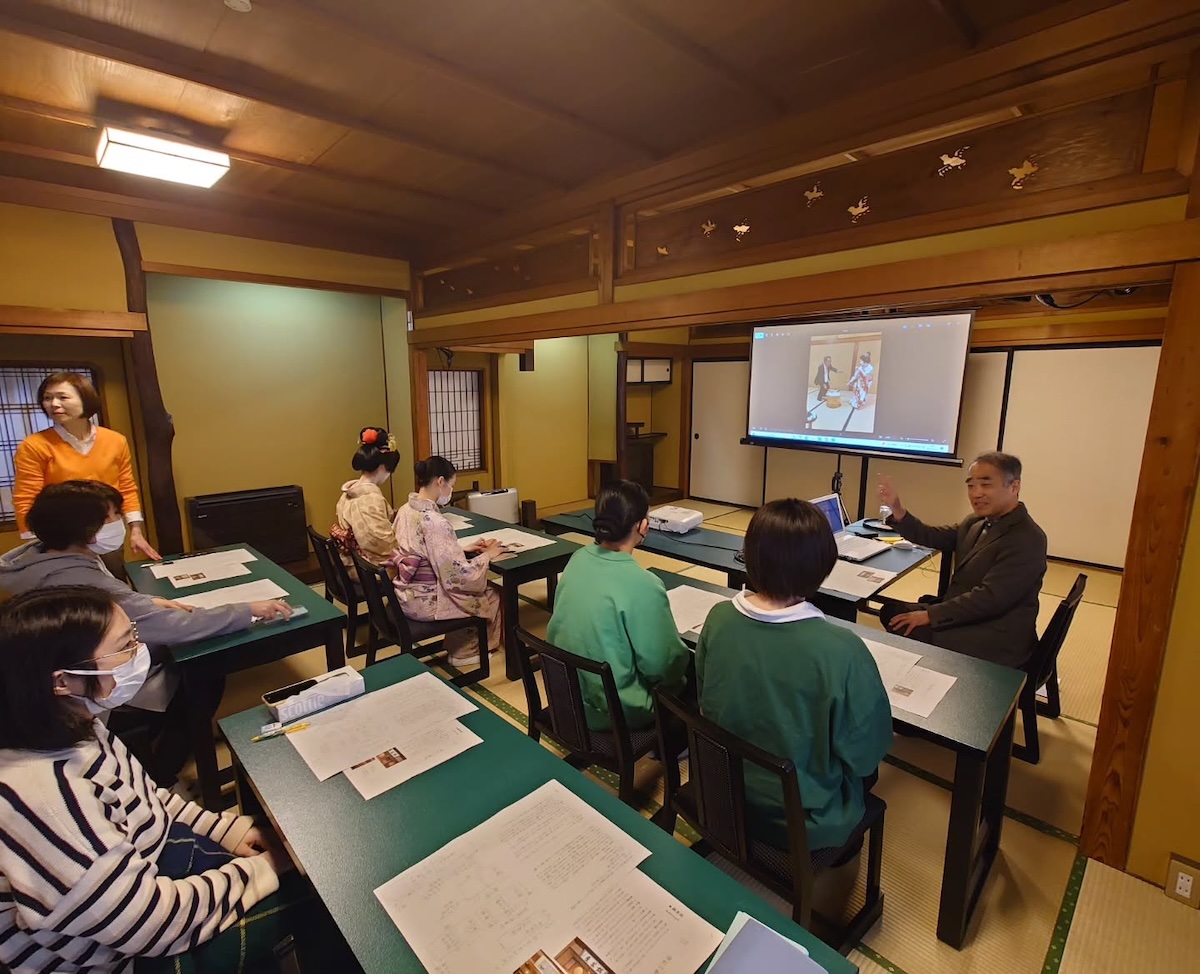
At Ryuto Shinko headquarters in the heart of Furumachi, a Niigata University professor instructs geigi in the finer points of hanging scrolls.
Like many traditional art communities the Furumachi geigi faced decline after the mid-twentieth century, but local supporters have taken remarkable steps to ensure that this heritage not only survives but evolves. While today there are 20 or so active geigi in Furumachi, at the community’s height their numbers reached 400. By 1960 there were just over 200. Their numbers continued to drop steadily as Japan transformed its economy, more women entered the workforce, and old ways faded. In 1976 there were 110 geigi, and in 1986 their ranks were halved again, to 60, with diminished prospects of new recruits joining. In a bid to save this cultural heritage and preserve Niigata’s ryotei culture, the following year a local business leader established, with financial investment from some 80 firms in the community, the company Ryuto Shinko. It provides a stable corporate structure through which geigi are employed and trained and their bookings managed in partnership with local businesses. Geigi receive a monthly salary and all the usual health, pension, and insurance benefits as well as maternity leave and childcare support. New recruits join the company to gain skills and experience and often go independent after ten years or so, remaining active in the community not only as performers and mentors but also as members of related professional associations. In this way they both provide and continue to receive career support, and the community thrives. When asked what distinguishes the Furumachi geigi community from others like it in Kyoto or Kanazawa, the geigi
will unanimously say that it is the warm ties and strength of their family-like bond.
Now in its fortieth year, and with a loyal base of investors and supporters within the community, Ryuto Shinko continues to preserve the performative arts and culture of the Furumachi geigi as well as the elegance of the historical Furumachi district itself, in part through involvement with the academic community. One such local figure is Kubo Aritomo, a native of Niigata and a tenured lecturer at Keiwa College in Shibata, Niigata, where his teachings and research focus on urban design and town planning from the perspective of community development and social entrepreneurship. A graduate of the Department of Architecture at Niigata University, Kubo went on to complete his Masters and PhD in environmental science there, looking in particular at the preservation of historic streetscapes in urban planning—a culmination of his research on the Furumachi district, its architecture, and culture. His dissertation on the ryotei culture of geisha districts nationwide received honorable mention from the City Planning Institute of Japan, which cited its thoroughgoing research and examination of the subject from the perspective of holistic urban planning.
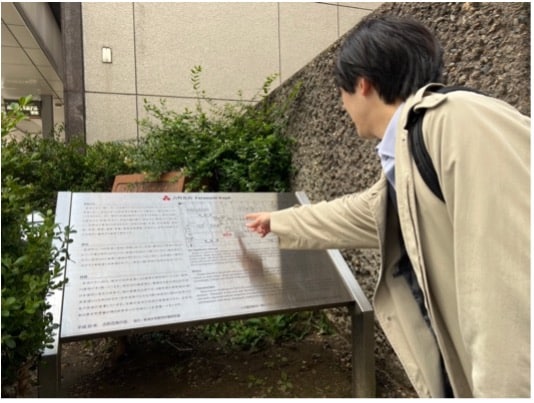
Kubo Aritomo points to a sign created for the Furumachi historical district as part of an initiative that has also produced architectural maps and walking tours.
As liaison for a number of community groups centered on the preservation of the Furumachi historical district, since 2015 Kubo has dedicated himself to initiatives aimed at broadening understanding of its townscape and heritage, including, of course, the geigi. He is one of a cohort of scholars addressing how local traditions should inform broader national narratives. In his classrooms and seminars, students work with him to identify social and community issues and get involved hands-on with local stakeholders to shape and implement solutions. For visitors to Niigata, Kubo points out, the Furumachi neighborhood offers not only the opportunity to enjoy traditional performative arts, but to immerse oneself in many aspects of authentic Japanese culture from architecture, art, and furnishings to cuisine, the world of tea, and the intangible delights of conversation and hospitality.
A closer look: What geigi do
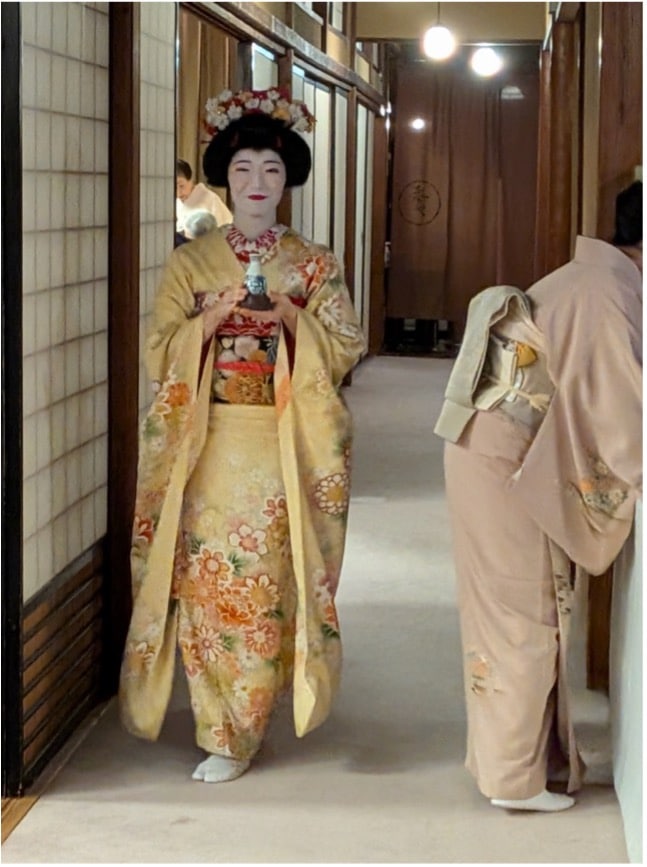
Elsewhere known as geisha and geiko, the geigi of Niigata train regularly not only in dance and song but also in the musical accompaniment of the three-stringed shamisen, the shinobue flute, and three different kinds of drum. They also master the manners and etiquette of the Edo Senke school of tea—not to mention the fine art of kimono wearing and styling. And they are consummate mood makers. When hired to perform at banquets or lunch and dinner gatherings, typically they will fan out into the audience afterward to chat with guests and pour drinks. Interact with them and you’ll find a refreshing openness, no doubt honed as much by their ability to read a room and make people feel at ease as by the spirit of an international port city where people of all backgrounds have always mixed, no matter the language barrier. With Japanese speakers they’ll sprinkle in local dialect; if you don’t speak Japanese, they’ll be happy to teach you some. And you might want to brush up on your paper-scissors-rock skills, because these women are masters of such parlor-room fun. They might up the ante on you with taruken, an advanced version of the game where both players use their other hand to keep a steady drumbeat going, and the loser must twirl in a circle to boot, all without missing a beat. The geigi calling card, called a senjafuda, is a small and fragrant rectangular sticker printed with her stage name and a seasonal or decorative design. It’s said they bring good luck, so guests often keep them as mementoes.
In the center of the Furumachi district is a townhouse—a former ryotei and another Registered Cultural Property, actually—that serves as Ryuto Shinko headquarters. It is home also to professional associations representing the geigi and the local and prefectural restaurant industry. On a recent visit, a congratulatory poster at the front door announced the latest fledging of one of its geigi, who, like several others, now maintains her own studio in town. Independent geigi continue to train and perform, and remain active in the community.
In the geigi world new recruits and early-career performers, typically between the ages of 18 and 22, are known as furisode-san, while those who have spent six to eight years in training and performance are called tomesode-san—terms that refer, respectively, to the long- and shorter-sleeved kimono they wear; their obi ties and hairstyles differ, as well. Supporting them are the “older sister” onee-san, some of whom are in their seventies and eighties. They no longer wear the white makeup or elaborate wigs, and in performances often fulfill the roles of musicians and singers.
A typical day for a geigi begins before noon, with preparation for whatever lesson is scheduled that afternoon—dance, shamisen, voice training, drums, flute, tea, etc. After a light meal at 4 p.m. it’s time to put on makeup and change into a kimono and wig. Evening engagements are typically scheduled from 6 p.m., and there may be as many as three or four on a given night. By 11 p.m. she will stop by headquarters to change out of her kimono and then return home. While most new recruits are from Niigata, in recent years appeal has grown and new geigi have joined the ranks from other prefectures, too.
Step into living traditions at historic venues
Booking a geigi is easy: the venue where you dine will make the arrangements for you. Share with them the nature of the occasion— a gathering of friends, an anniversary celebration, or a business function, for example—and they’ll help you determine the performers and appropriate program. As mentioned, two of the most renowned establishments are Nabejaya and Ikinariya.
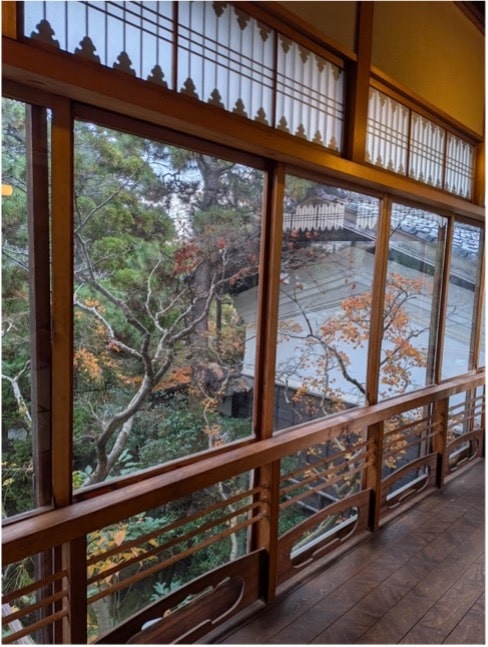
Ikinariya boasts a history of three centuries and a garden that’s more than 6,600 square meters (12,000 sq ft) in size, with a pond and waterfall at its center. All the floral favorites—plum blossoms, daffodils, flowering quince, a variety of cherry trees, and azaleas, to name a few—bloom amid Japanese black pines as old as 400 years. (When we arrived on a mild evening in early December, a cadre of gardeners were busily draping the famed pines with yukitsuri—ropes that fan down from the treetops to the lower branches to shield them from the weight of winter snows. Even the cheeky tanuki sculptures, one dating back to the late 1800s and the other a gift commemorating the birth of the present proprietor, were having their own thatched hut built for the coming months.) The trellis of white wisteria just inside the gate is a draw for visitors each spring. Decades ago, cranes used to be kept in the garden and are, along with pines, a design theme found throughout the premises inside. Both are symbols of longevity and prosperity.
The main gate dates back to 1914 and, like nine other structures on-site, is a Registered Cultural Property. Its copper roof, latticework, and openwork carvings of cranes exude Taisho-era elegance and signal that something special indeed awaits on the other side. Step into the buildings, and the black-lacquered slatted clapboards and plasterwork of the walls bespeak the careful craftsmanship of yesteryear. In all there are 11 private rooms at Ikinariya, ranging in size from 12 mats to 140 and welcoming parties from two to 160. Mazelike layouts ensure privacy, and design surprises await everywhere—look, for example, for the metal door pulls of cranes in different postures, and transoms with openwork carvings of the birds. A painstakingly embroidered spider’s web adorning an unassuming cabinet door is another of many such playful touches bespeaking the artistic sensibilities of earlier times. Ask to be shown the plaster relief carving of a dragon that adorns the outdoor bath. (In the warmer months it’s possible to reserve a private soak in this bath, itself a Registered Cultural Property, if you book ahead.)
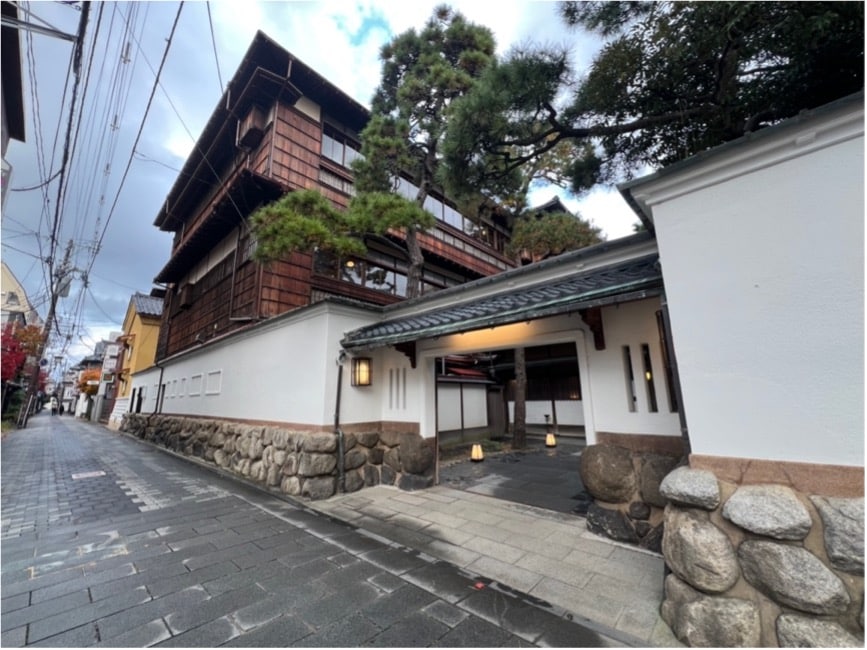
A short distance away, in the center of Furumachi, presides Nabejaya, opened in 1846. Emperor Meiji, who reigned from 1867 to 1912, dined here, as have many members of the imperial family and countless literary figures and other illuminati over the years. Nabejaya’s first iteration was lost to fire in 1908; the oldest of the present buildings date to 1910. Here, 11 banquet rooms range in size from 12 mats to 200 and accommodate parties from two to 300. When you place a reservation for a meal, ask for a site tour to see more of the remarkable furnishings and art on premises, and to hear some of the episodes behind their creation. Note, for example, the ornate ceiling, marble mantelpiece, woodwork, and glass panels of the first-floor drawing room, designed in 1932 with materials and craftsmen brought over from Italy, or the sheer girth of the alcove pillar fashioned of Oriental persimmon in Room 19. The 200-mat banquet hall on the third floor is the only one of its size housed in a wooden structure in the country.
From the squeaky creaks and steep pitch of the wooden stairs to the plaited reed ceilings and whimsical door pulls and other fittings on display, venues such as these are living museums of another time. Dining at them is also an opportunity to admire rare kinds of wood and cuts of timber that can no longer be obtained. Their operation and our patronage supports, in turn, those who have the traditional carpentry and other skills required to repair and upkeep their furnishings and décor.
Touring the willow capital: Tips from the geigi
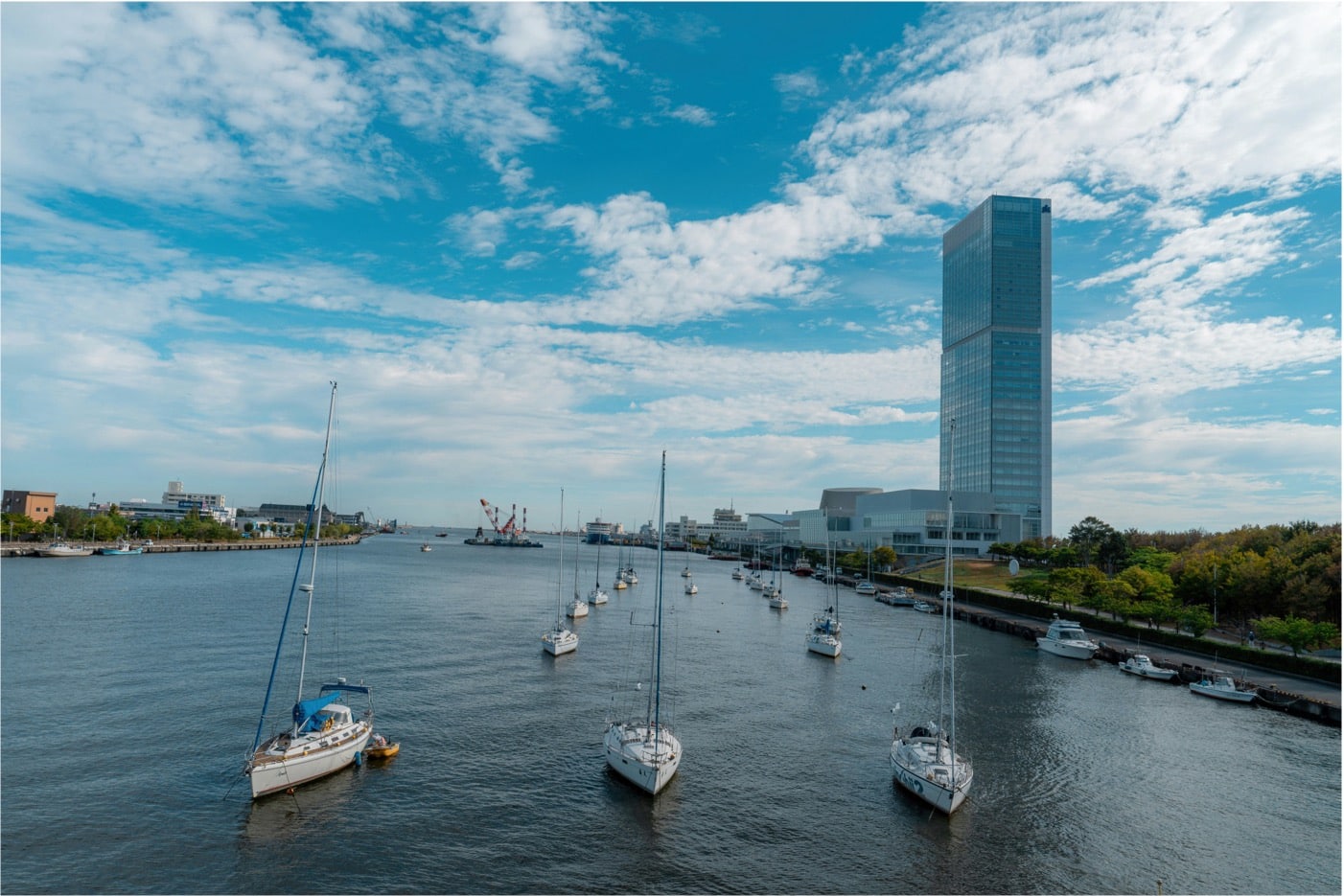
Until the 1950s Niigata had many canals lined with willow trees in its downtown area. As waterway transport gave way to road, rail, and air the last of the canals was filled in by 1964, but the “City of Willows” (Ryuto) nickname lives on in conversation and is seen in names like that of Ryuto Shinko, or Ryuto Bridge. The cultural refinement associated with willows has roots in Chinese poetry, where the tree and its slender branches evoke feminine beauty, nostalgia, and resilience. While evidence of the old canals is still seen in the width of the roads, their grid layout, and even street names like Higashi-bori and Nishi-bori, there are fewer willow-lined byways today than imagination might suggest. There is talk, however, of planting more of the symbolic trees. Following are a handful of ways to experience different highlights of Niigata that are very much alive today.
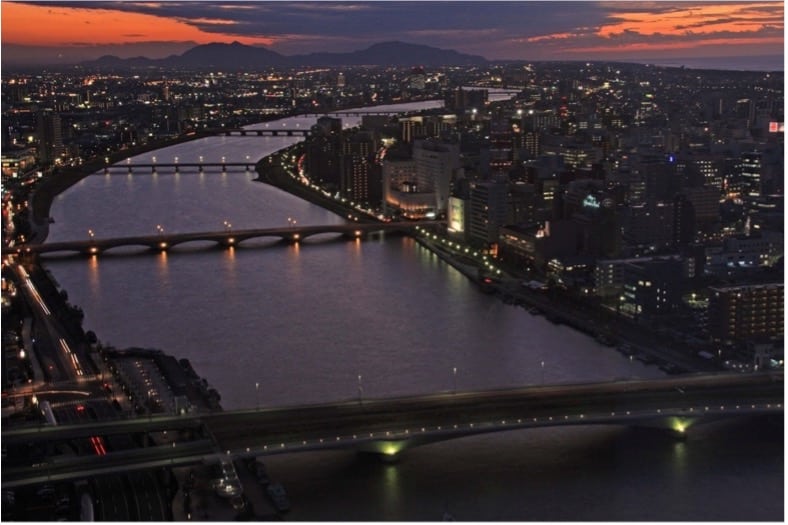
Get your bearings—or just enjoy the sparkling nighttime lights—with the panoramic views from the observation deck atop the tower at the waterfront convention site Toki Messe, the tallest building on the Sea of Japan coast. Across the Shinano River to the west is the Niigata City History Museum and beyond that, the sea. On a clear day the outline of Sado Island can be seen in the distance. To the north are Niigata Airport and, in the foreground, Niigata Port. In operation since the 1500s, the port was one of the historic five that reopened Japan to external trade in the late nineteenth century and is the only one of that set located on the Sea of Japan. Niigata has always been an important gateway for Japan’s exchanges with its northeast Asian neighbors—in fact consulates of Russia and the Republic of Korea are right in the building. To the east, shinkansen can be seen whizzing in and out of Niigata Station. And to the south is Bandai Bridge, a much-loved city symbol that has been central to Niigata’s growth. Now in its third iteration built in 1929, the beautifully arched bridge won the hearts of citizens all over again when it survived the Niigata earthquake of 1964. It was named an Important Cultural Property in 2004.
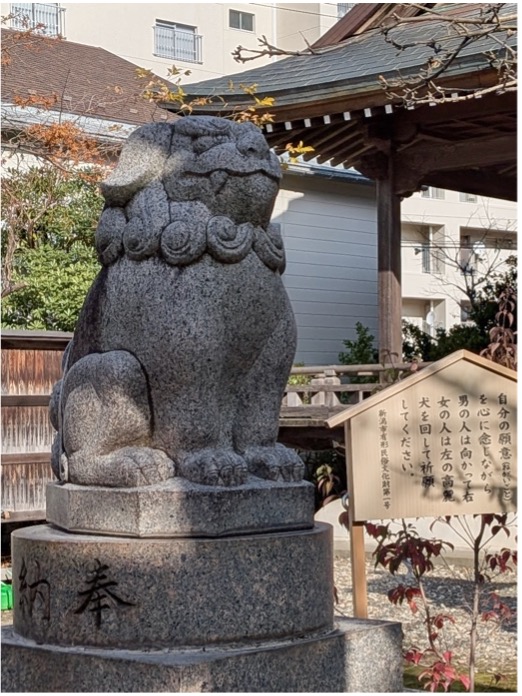
Two komainu guardian dog statues carved of granite stand on the grounds of the Minato Inari Shrine, a sanctuary northeast of the Furumachi district, closer to the waterfront. Records say the shrine was founded in 1716 and that back in the day, its trees served as a landmark for ships entering and leaving port. One of those, a 300-year-old pine, still stands on-site. The komainu statue to one’s right facing the Worship Hall is for men; the one at left for women, and they are unusual in that they are configured to revolve 360 degrees—when a bit of elbow grease is applied. Local lore holds that courtesans used to turn the statue’s face westward in the middle of the night, hoping for westerly winds to stir up rough seas and keep the sailors in port. The folk custom is humorously recounted in the quote, inscribed in stone nearby, of Niigata’s first mayor, Yagi Tomonau (1841–1929): I’ve been fooled myself a few times by that old shrine dog. (Yagi is better remembered for championing the building of Bandai Bridge.) Nowadays, though, the komainu lend an ear to all manner of prayer when the statue is turned a full rotation as you make your wish. These komainu in the shrine yard are the third generation; their well-worn predecessors, dedicated to the shrine in 1854, were retired in 1995 after more than a century of service and now sit just inside the worship hall. Another folk custom you can participate in at the shrine is ningyo-nagashi. Obtain a paper cut-out of a doll at the shrine office, then blow on the effigy three times and rub it on your body to transfer any ailments or off-energies onto it. Then, release it in the stream that flows on the grounds while incanting a wish for purification.
Last but not least—and for an extra measure of good energies—put the mid-September Niigata Odori on your calendar. Established by Ichiyama Nasoro VI and overseen and choreographed today by her daughter Nasoro VII, it’s an annual recital showcasing the dance, song, and musical skills of the entire Furumachi geigi community—and filled with the spirit and pride of the prefectural capital. 2026 marks its 38th year.
—Susan Rogers Chikuba